
Disclosure: Kangglow may earn a commission when readers purchase through links on this page. Product availability, materials, colors, prices, and return terms can change. Check the current R.RIVETER product page before ordering. View our full Affiliate Disclosure.
R.RIVETER is easiest to understand when you separate the bag from the reason the company exists. The bags are designed for ordinary work. They use leather, canvas, nylon, and hardware in practical shapes that can handle commuting, errands, travel, and daily carry. The company also builds its production model around military spouses who need work that can move with their families.
That combination gives the brand a clear identity, but it does not automatically make every bag a smart purchase. A Hopper crossbody, a Dot satchel, and a Corbin backpack answer different needs. Materials affect weight and care. The American assembly story adds meaning, but the bag still has to fit your laptop, your commute, and your budget.
Is R.RIVETER worth buying?
R.RIVETER is worth considering if you want a functional American assembled bag with a visible connection to the military spouse community. The brand has a broader material range than the phrase “American made handbag” suggests. Its current collection includes washed canvas, leather, suede, premium nylon, quilted nylon, denim, upcycled materials, and rugged nylon.
The value depends on what you want from the purchase. If you need a bag with a specific size, a comfortable strap, reliable pockets, and a fabric that matches your routine, R.RIVETER gives you several practical routes. If the brand mission is the main reason you are shopping, take the time to choose a style you will actually carry. A meaningful purchase is easier to justify when the bag earns regular use.
What makes the brand different
R.RIVETER was inspired by Rosie the Riveter and the role women played in the workforce during World War II. Its current mission focuses on creating mobile, flexible income for military spouses. Parts of the bags are made remotely across the country, then the products are finished and assembled in the United States.
The model fits the realities of military families. A spouse may move from one duty station to another, which can make a fixed local job difficult to keep. Remote production lets different Riveters contribute components while moving with their families. The company also connects each bag to the person or people involved in its production through story tags and Riveter identification.
Those details are part of the product experience, rather than a replacement for it. You should still judge the bag by its construction, capacity, closure, strap, and care requirements.
Materials and what they mean in daily use
Washed canvas
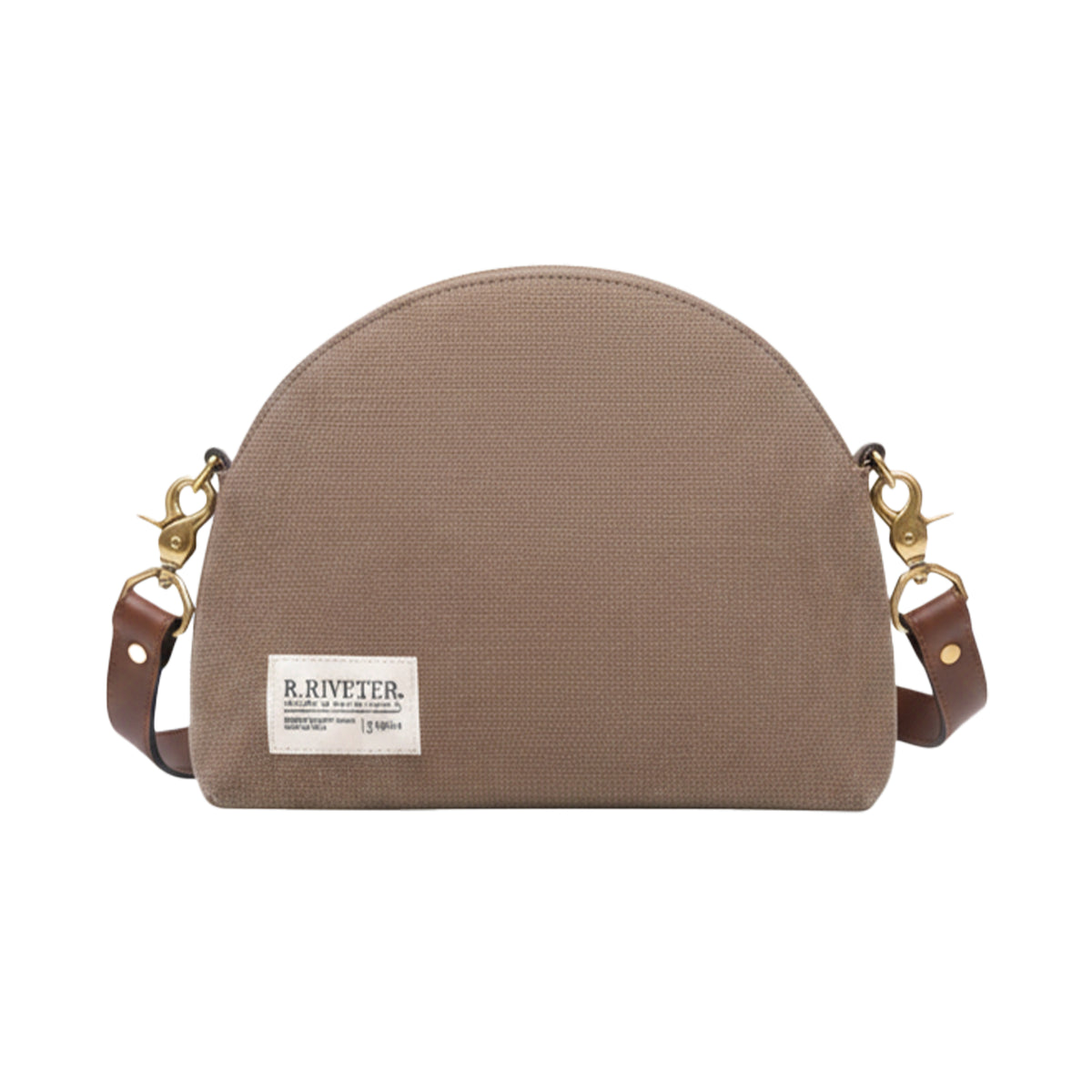
Washed canvas has a relaxed surface and a casual look that works well for everyday crossbody bags and totes. It is usually easier to wear with jeans, travel clothes, and weekend outfits than a formal leather satchel. It can also show marks, so R.RIVETER recommends spot cleaning canvas with water and a brush or sponge.
Leather and suede
Leather gives the bags more structure and a dressier finish. It also tends to age visibly, which can be a benefit if you like natural patina and do not expect the bag to look untouched forever. Suede brings a softer texture, but it asks for more care around water, dirt, and friction.
Nylon and quilted materials
Premium nylon, rugged nylon, and quilted nylon are useful when low weight and weather tolerance matter more than a traditional leather finish. These materials appear in travel bags, belt bags, backpacks, and seasonal collections. Check the individual product page for the exact fabric and cleaning instructions because “nylon” covers several different constructions.
The right material is the one that matches your routine. A canvas crossbody may be better for constant errands. A leather satchel may suit an office wardrobe. Nylon can make more sense for travel, outdoor use, or anyone who dislikes carrying a heavy bag.
Three R.RIVETER styles to understand before buying
Hopper for hands-free daily use
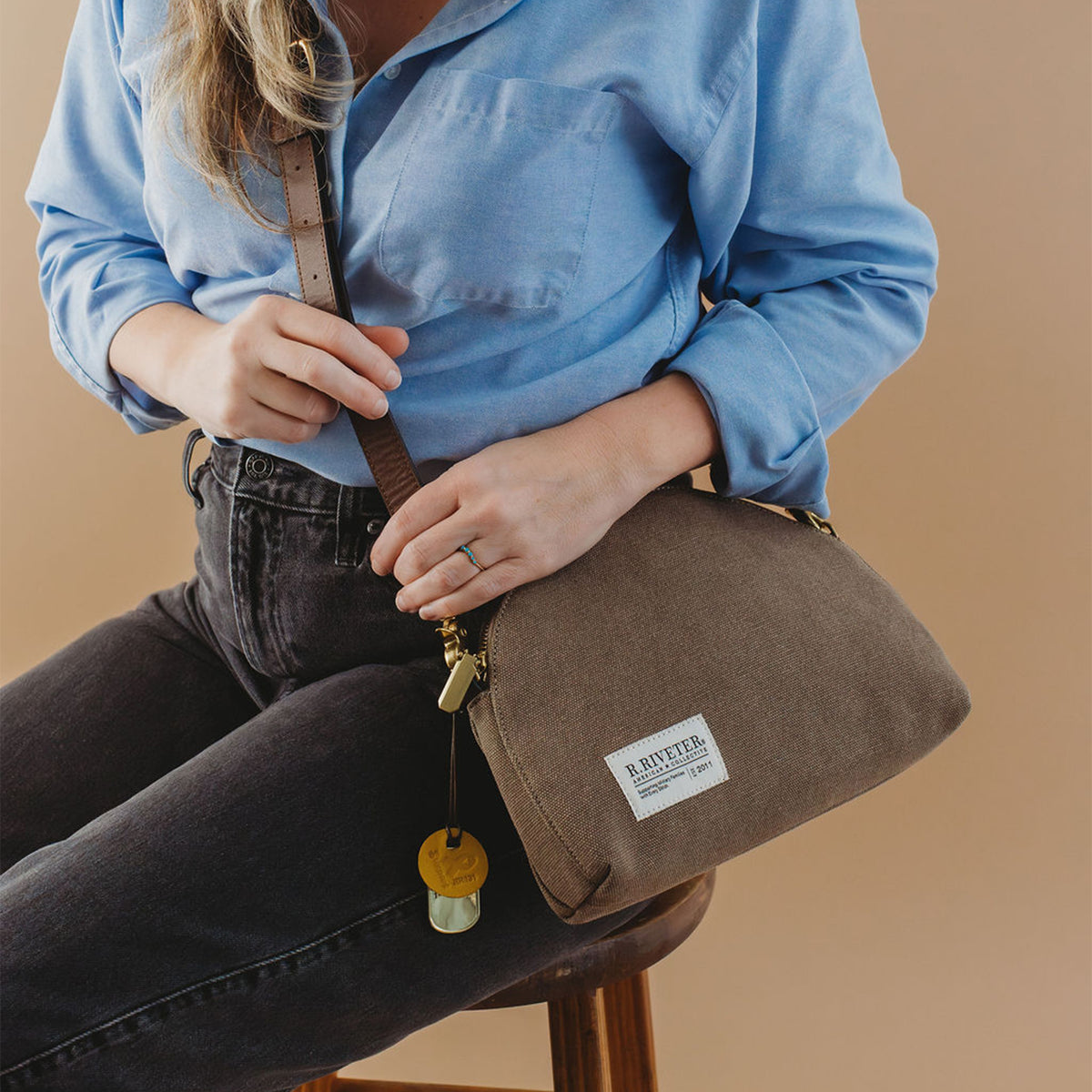
The Hopper is a practical crossbody shape with a washed canvas exterior, striped lining, two interior open pockets, one interior zipper pocket, a brass zipper, and an adjustable leather strap. Its profile is compact enough for everyday use while still offering more organization than a flat pouch.
The Hopper is a good fit for walking around a city, running errands, traveling light, or keeping both hands free. The strap length matters here. Check the adjustment range and think about whether you will wear the bag over a coat, across the body, or close to the shoulder.
Choose the Hopper if: you want a casual crossbody with useful internal pockets and a relaxed material.
Look at another style if: you carry a laptop, a large water bottle, or several bulky items every day.
Dot for a compact satchel with structure
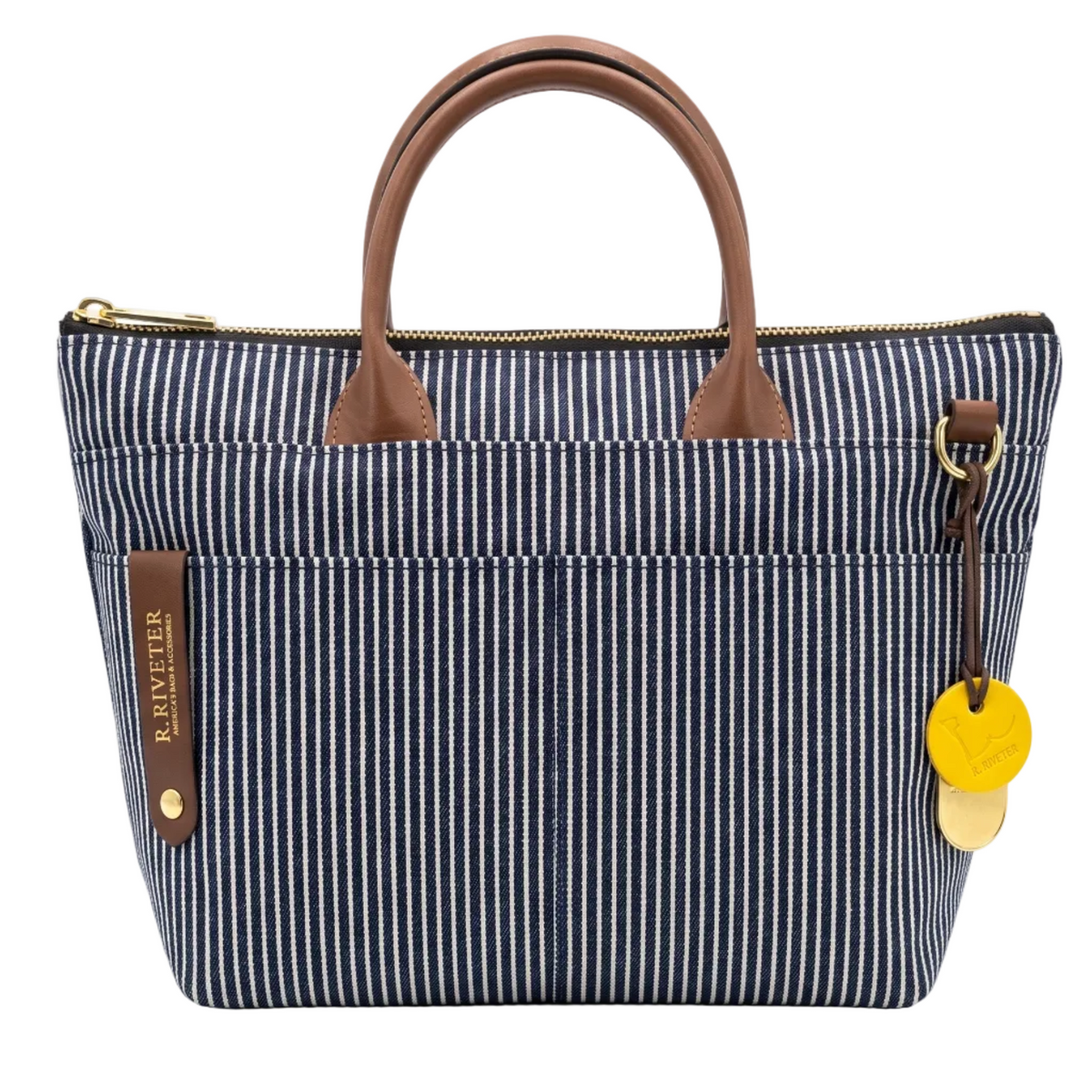
The Dot sits between a small handbag and a compact crossbody. The current Hickory Stripe Denim version is listed with two rolled leather handles, an adjustable crossbody strap, exterior open pockets, interior open and zipper pockets, a brass zipper, and leather feet.
That mix gives the Dot more structure than a simple pouch. It can work when you want a bag that looks polished enough for a casual office or lunch but still feels easy to carry. The size is the main decision. A compact satchel rewards editing. It is a poor choice if you expect to carry every possible extra.
The Dot also illustrates how R.RIVETER connects product design with the stories behind its names. The style is named for Dorothy Braden, a cryptographer and teacher whose history becomes part of the product description. That storytelling adds character, but the pockets and dimensions determine whether the bag fits your day.
Corbin for work and commuting
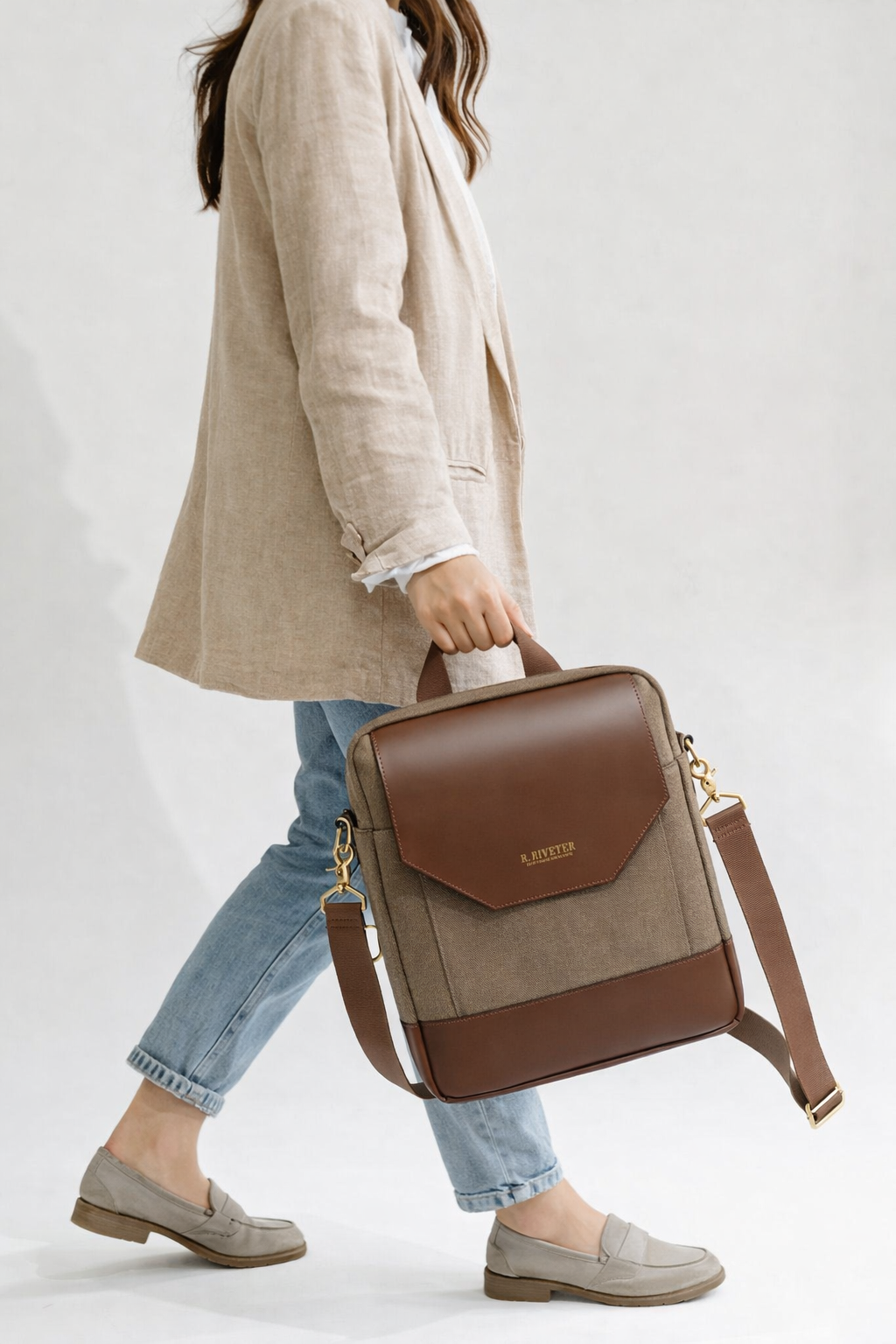
The Corbin is the clearest choice for someone who prefers a backpack. R.RIVETER describes it as a slim, functional dual carry backpack, and the collection includes versions in washed canvas with leather details. A backpack distributes weight more evenly than a shoulder bag, which can be useful for commuting, campus, and travel days.
Before ordering, measure your laptop and compare it with the product details. A backpack can look roomy while still having an interior that does not suit a wide computer, a large charger, or a thick notebook. Check the strap design, access points, and whether the bag can be carried comfortably with your usual outerwear.
Choose the Corbin if: you carry work equipment or prefer an even load across both shoulders.
Choose a tote or satchel if: you want faster access to your belongings or a more traditional handbag shape.
Why the American assembly story matters
R.RIVETER describes its bags as finished and assembled in the United States using globally sourced materials. That distinction matters when reading product descriptions. American assembly does not mean every raw material or component originates in the United States. It describes where the products are completed and assembled within the company’s production system.
The more distinctive part of the model is the distributed work behind the products. Military spouses can contribute components from different locations, creating flexible income that accommodates frequent moves. For shoppers who want purchases to support a specific social mission, that connection is a central part of the brand’s value.
The mission also creates a reason to pay attention to the product’s story tag or Riveter number. It gives the bag a record of participation that a mass-produced accessory usually does not provide.
What to check before ordering
- Measure what you carry. Check laptop dimensions, water bottle size, notebook width, and the items you use every day.
- Choose the material around your routine. Canvas, leather, suede, nylon, and quilted fabrics have different care needs.
- Review the strap length. A crossbody that works over a T-shirt may feel short over a winter coat.
- Check the closure and pocket layout. Zippers, open pockets, and divided interiors affect how quickly you can reach your essentials.
- Read the current return terms. The product pages state that eligible bags can generally be returned within 30 days in like-new condition with tags attached. Confirm the live policy before buying.
- Look at current availability. R.RIVETER carries seasonal colors, special editions, archive releases, and heirloom styles that may have different stock status.
Who is R.RIVETER best for?
R.RIVETER suits shoppers who want a practical bag with a visible story behind it. The range works especially well for people who move between work, travel, family life, and outdoor errands. There are enough shapes to cover different routines, from a small crossbody to a commuter backpack and a larger tote.
The purchase makes less sense when you are choosing only for a low price or maximum trend value. Several R.RIVETER bags sit in the premium accessory range, so the decision should include the material, construction, expected frequency of use, and the value you place on the military spouse mission.
The final assessment
R.RIVETER is worth considering when the bag’s function and the company’s purpose both matter to you. The brand offers useful shapes, durable materials, and a production model that gives military spouses flexible work. Those strengths become meaningful when you choose a bag that fits your actual routine.
Start with the use case. Pick Hopper for hands-free daily carry, Dot for a compact satchel, Corbin for commuting, or a larger tote when you need more room. Then check the materials, measurements, strap, pockets, and current return terms. The story behind the bag adds value after the practical decision is right.