
Disclosure: Kangglow may earn a commission when readers book through links on this page. Service areas, accepted items, appointment times, donation options, and prices vary by location and job. Confirm the current terms and final onsite quote before authorizing removal. View our full Affiliate Disclosure.
Old furniture becomes a different problem after a move. Before moving day, a sofa is part of the packing plan. Afterward, it is the piece blocking the garage, taking up half the spare room, or preventing the old apartment from being turned over. The fastest way to deal with it is not always the cheapest, and the cheapest option may disappear once stairs, deadlines, and local pickup rules enter the picture.
In the United States, the practical choices are usually to sell, donate, use a municipal bulk-pickup program, return or trade in an item through a retailer, haul it yourself, or hire a full-service removal company such as 1-800-GOT-JUNK?. The right route depends on condition, time, access, and whether you have anyone who can safely lift the item.
Start with condition, not disposal
Before listing anything or booking a truck, inspect the furniture in daylight. A usable dining table with surface scratches has options. A sagging sofa with odors, pest evidence, or structural damage probably does not. Calling everything “donatable” only delays the decision and can leave you scrambling when a charity declines it.
Sort each piece into one of three groups:
- Good enough to sell: clean, stable, complete, and worth the time needed to photograph, list, answer messages, and coordinate pickup.
- Useful but not worth selling: structurally sound and clean enough for a donation center, reuse organization, or free local listing.
- Ready for removal: broken, badly stained, unsafe, missing essential parts, or unlikely to be accepted by a reuse program.
Check drawers and compartments before anything leaves. Moving paperwork, spare keys, jewelry, remotes, hardware, and personal documents have a habit of remaining inside old desks, nightstands, and recliners.
Option 1: sell it locally
Selling works best when the furniture has recognizable value and you have several days to spare. Take honest photos of all sides, include measurements, disclose damage, and state whether the buyer must carry the item out. “Pickup only” does not help if the buyer arrives alone and expects you to move a sectional down two flights of stairs.
Price for the deadline you actually have. A high listing price may be reasonable with a month to wait; it is less useful when keys are due on Friday. If messages become a second job, reduce the price once, set a firm pickup cutoff, and move to the next option when that deadline passes.
Option 2: donate usable furniture
Donation can extend the life of a clean, functional item, but acceptance is not automatic. Local organizations set their own rules based on condition, storage space, demand, and their ability to collect large pieces. Upholstered furniture and mattresses often face stricter standards than wood tables, chairs, or dressers.
Call before loading anything. Ask whether the organization accepts the exact item, whether pickup is offered in your ZIP code, how far ahead it books, and what condition requirements apply. A donation receipt may be available, but questions about tax deductibility and valuation belong with the organization or a tax professional.
A donation drop-off image should not be read as a guarantee that every item collected by a junk-removal service will be donated. 1-800-GOT-JUNK? says it prioritizes donation and recycling where local channels and item condition allow. Broken, contaminated, or unaccepted furniture still needs proper disposal.
Option 3: check municipal bulk pickup
Many cities and waste districts offer scheduled bulky-item collection, sometimes as part of residential service and sometimes for an extra fee. Rules vary sharply. You may need an appointment, a tag, proof of residency, a specific curb placement, or removal of glass and detachable parts. Apartment residents may have to work through the property manager rather than the city.
This is often the least expensive route for one eligible item when you can move it to the curb safely. It is a poor fit when the pickup date falls after your lease deadline, the item cannot be left outdoors, or the furniture is still deep inside the home.
Option 4: ask the new-furniture retailer
If old furniture is being replaced rather than simply removed, ask the retailer whether delivery includes haul-away. Mattress and appliance sellers are more likely to offer it than general furniture stores, and fees and preparation rules vary. Confirm the service before delivery day. A delivery crew that is not authorized to take the old item usually cannot make an exception at the door.
Option 5: use full-service furniture removal
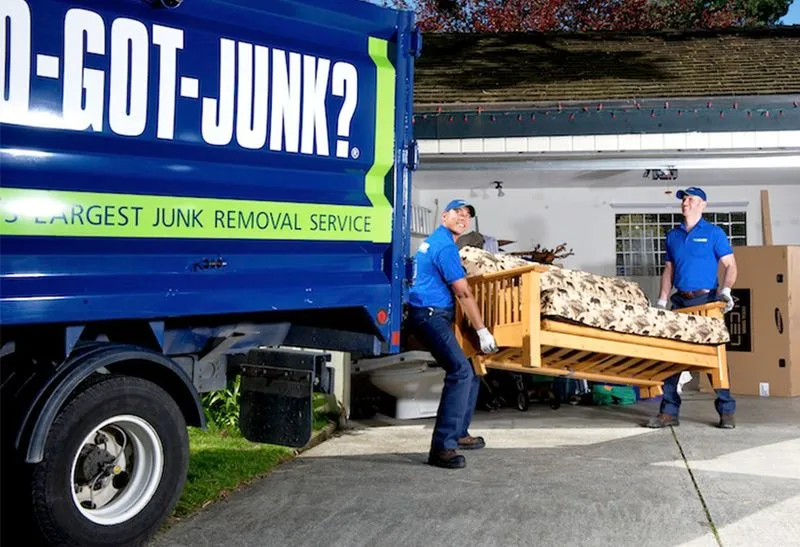
Full-service removal makes sense when labor is the real obstacle. 1-800-GOT-JUNK? says its two-person team can remove furniture from where it sits, so you do not have to drag a sofa, bookcase, desk, or bed frame to the curb. The team provides an in-person estimate, and there is no obligation to proceed until you approve the price.

If you accept, the crew handles lifting, loading, and basic sweeping afterward. The company describes its furniture service as covering disposal and environmental fees as part of the quoted price. Same-day service may be available in some markets, but availability should be checked for the property ZIP code rather than assumed.
How the price is determined
Furniture jobs are generally priced by how much room the load takes in the truck, from a minimum charge for a very small load through larger fractions of a truck. A single item may receive an individual price. The exact price is normally given after the team sees the furniture in person.
That makes a complete walkthrough important. Show every piece before approving the quote, including furniture in a basement, attic, storage unit, garage, or backyard. Ask whether dismantling, stairs, long carries, or unusually heavy items affect what the team can do. Do not wait until loading has started to mention another room.
When 1-800-GOT-JUNK? is worth considering
- You have a firm lease, closing, or storage deadline.
- The furniture is too heavy or awkward to move safely.
- Items are upstairs, downstairs, or far from the curb.
- You have several pieces and want one crew to handle the load.
- You do not own a suitable vehicle or want to make disposal-site trips.
- You need the room usable immediately after pickup.
It may not be the economical choice for a single curb-ready chair when your city will collect it next week. The service is paying for speed, labor, and logistics. Compare alternatives at the same service level rather than comparing a full-service quote with a disposal fee that still requires you to supply the vehicle and lifting.
What furniture can usually be removed?
The company’s furniture page discusses sofas, desks, bed frames, bookcases, tables, and other heavy household pieces. Acceptance still depends on whether two team members can safely lift the item and whether it is non-hazardous. Oversized, built-in, damaged, or contaminated items should be described in advance.
Mattresses, sleeper sofas, pianos, hot tubs, and items involving dismantling can raise different handling questions. Send photos or call the local service if an item is unusually heavy, attached to the property, affected by mold or pests, or located behind narrow turns. Accurate details reduce the chance of a surprise at the appointment.
A practical post-move timeline
Seven or more days available
List the best pieces for sale and contact donation organizations immediately. Check the municipal bulk-pickup calendar at the same time. Do these in parallel; waiting three days for an online buyer before checking a once-a-month city pickup is how furniture gets stranded.
Three to six days available
Price sale items to move, not to test the market. Confirm donation pickup rather than assuming it will be available. Obtain a full-service estimate as a backup so the final day is not spent calling every hauler in town.
Less than 48 hours available
Focus on confirmed options. A promised buyer who has not set a pickup time is not a plan. Check same-day or next-day removal availability, disclose all items and access restrictions, and make sure someone can approve the onsite quote.
Prepare the property before the crew arrives
- Photograph and count every item. Include pieces in separate rooms and outdoor areas.
- Remove personal belongings. Empty drawers, cabinets, sofa storage, and under-bed compartments.
- Separate what stays. Use labels or move keep-items away from the removal path.
- Measure difficult exits. Note tight stair turns, narrow doors, and elevator dimensions.
- Arrange building access. Reserve elevators, loading areas, or parking permits when required.
- Protect the route. Move fragile decor, pets, and floor obstacles before the crew arrives.
- Review the complete quote. Confirm the scope and total before authorizing work.
Questions to ask at the estimate
- Does this price include every item I showed you?
- Are lifting, loading, cleanup, and disposal fees included?
- Can the team remove the furniture from its current room?
- Does anything need to be dismantled first?
- Which items cannot be accepted?
- Will reusable pieces be considered for donation or recycling where possible?
The bottom line
Use the furniture’s condition and your deadline to choose the route. Sell pieces that have real resale value and enough time to find a buyer. Donate clean, functional furniture when a local organization confirms acceptance. Use municipal pickup when the rules and schedule fit. Choose full-service removal when lifting, access, mixed items, or a hard deadline makes the cheaper options impractical.
1-800-GOT-JUNK? is most useful as the labor-and-logistics option. The team sees the furniture, quotes the job, and removes it from where it sits if you approve. You pay for convenience, so make the comparison honestly: include your time, vehicle, lifting help, local fees, and the cost of missing a move-out deadline.